
IT outsourcing has become a trend for many businesses that want to optimize their resources, reduce costs, and improve their efficiency. IT outsourcing refers to the practice of hiring a third-party company to handle technology-related tasks for an organization. Vietnam is emerging as a top destination for IT outsourcing due to its cost-effectiveness, technical expertise, socio-economic stability, big investors, and strategic location. Vietnam has a rapidly growing IT industry, with a young and talented workforce, which has attracted many foreign investors. According to Vietnam Software and IT Services Association (VINASA), the country’s IT industry is expected to grow by 15-20% annually and reach a value of USD 16-18 billion by 2025. Moreover, Vietnam ranks 8th out of 190 countries in the World Bank's "Ease of Doing Business" report for 2020. Vietnam's business-friendly policies, favorable tax regime, and government support for the IT industry make it an attractive destination for IT outsourcing. In this article, we will discuss the top 10 trusted IT outsourcing companies in Vietnam and why you should choose them for your business needs.
9 Best Enterprise Resource Planning Vendors In 2023 That You Shouldn’t Overlook
Enterprise resource planning (ERP) software has become an essential part of modern businesses, providing a comprehensive suite of applications to manage a company's various functions, including finance, manufacturing, sales, marketing, and human resources. These systems allow companies to automate their workflows, streamline their operations, and gain insights into their business performance. In recent years, ERP systems have become increasingly popular among businesses of all sizes, and there are now dozens of vendors offering these solutions. In this blog post, we'll be discussing the top 10 best enterprise resource planning vendors, taking into account their features, pros and cons, pricing, and other factors.
10 Best Enterprise Resource Planning Software in 2023
Enterprise resource planning (ERP) software is an essential tool for companies of all sizes to operate and automates businesses’ daily workflow. An ERP system integrates various business processes such as accounting, inventory management, order management, and customer relationship management into a single software solution. This integration helps to improve efficiency, reduce errors, and increase productivity. For example, Amazon has gained a lot of benefits since using SAP as its ERP solution. By utilizing it, Amazon was able to reach its target audience on a large scale, manage its sales, retain customers, analyze profit margins, and make plans prior to ERP suggestions. Now you get a basic understanding of ERP’s powerful benefits, right? However, with so many ERP software options available, it can be challenging to decide which one is the best fit for your business. In this article, we will review some of the best ERP software options available in the market.
Modular Method for Enterprise Resource Planning (ERP): Definitions, Examples, Benefits
Enterprise Resource Planning (ERP) systems are becoming increasingly popular in businesses of all sizes as a way to manage their resources more efficiently. ERP systems provide businesses with a centralized location to manage their finances, supply chains, production, and other essential business functions. A modular ERP system is a type of ERP system that provides businesses with the flexibility to select only the modules that they need, allowing them to customize their system to their specific needs.
Enterprise Resource Planning (ERP) Healthcare – A Rising Demand in The Healthcare Industry
In recent years, the healthcare industry has witnessed a surge in technology adoption to improve patient care and organizational efficiency. Enterprise resource planning (ERP) is one such technology that has gained traction in the healthcare sector. ERP is a software solution that enables organizations to streamline their business processes, manage data, and improve decision-making. According to Precedence Research, the global healthcare ERP market is projected to reach USD 11.6 billion by 2030, with a CAGR of 5.96 % from 2022 to 2030. This blog aims to provide an overview of ERP in healthcare, its differences from electronic health records (EHR), and the benefits of implementing it in healthcare institutions.
Enterprise Resource Planning (ERP) – An Effective Solution to Leverage Your Business Performance
Enterprise Resource Planning (ERP) is a software tool that enables businesses to automate and integrate various functions, such as financial management, supply chain management, customer relationship management, and human resources management, into a single, unified system. In this blog post, we will explore the different types of ERP and their benefits, as well as why businesses need ERP and how to effectively implement it into their business strategy.
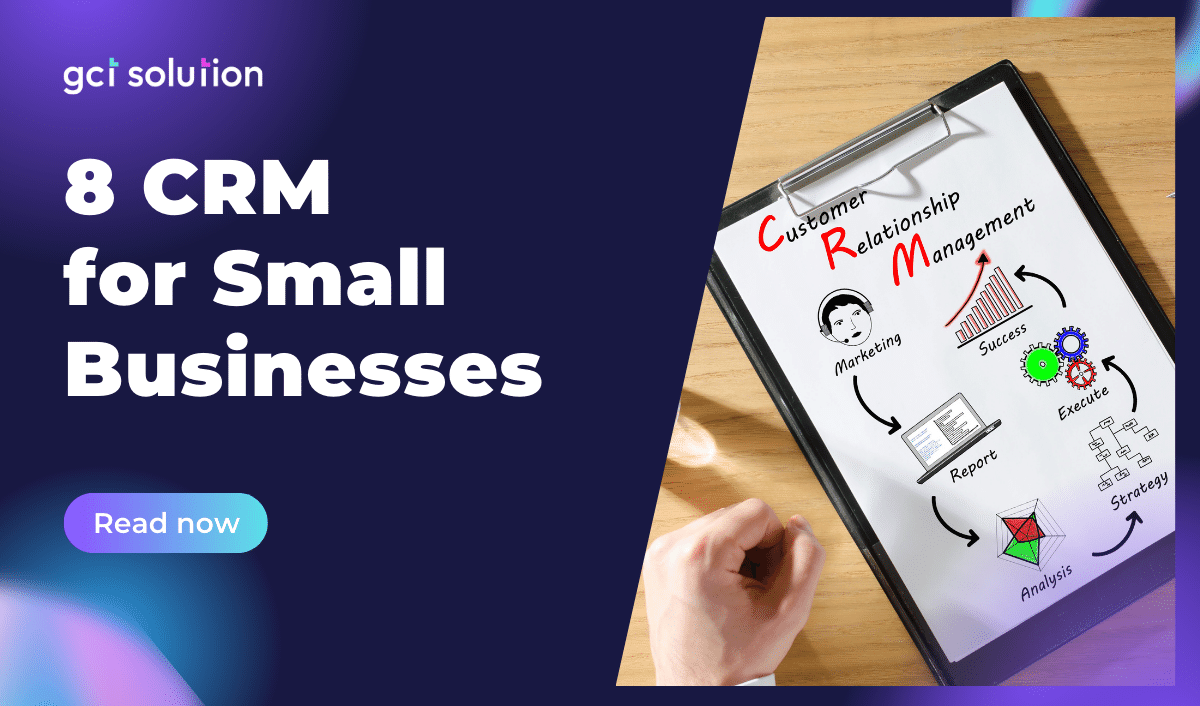
8 Customer Relationship Management (CRM) for Small Businesses
As they say, "the early bird catches the worm," and having an effective CRM system can help small businesses attract and retain customers, increase their revenue, and stay ahead of the competition. According to a study by Forbes, businesses that use CRM systems can expect to see a 29% increase in sales revenue. That's quite a significant number, isn't it? However, not all businesses have the resources or knowledge to develop and maintain an effective CRM system. Small businesses, in particular, face unique challenges in this regard. Luckily, there are many affordable and scalable CRM solutions that cater to small businesses. In this blog post, we will cover the eight best CRM solutions for small businesses so that you could thoroughly consider them before making any important decisions!
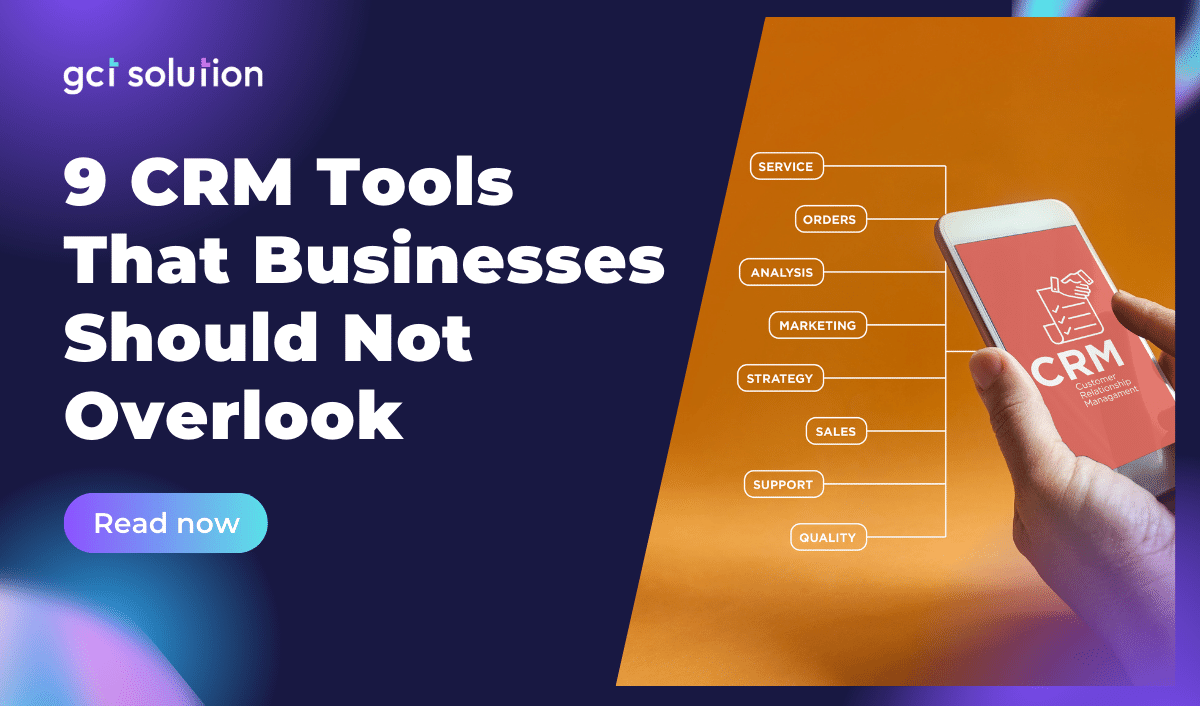
9 Customer Relationship Management Tools That Businesses Should Not Overlook
Customer Relationship Management (CRM) is a crucial aspect of business success. It involves managing interactions with current and potential customers to improve customer satisfaction, loyalty, and retention. An effective CRM strategy requires the right tools to help businesses manage their relationships with customers efficiently. In this article, we will discuss the 9 best CRM tools that you should not miss.
4 Reasons Highlight The Importance of Customer Relationship Management (CRM)
As customers are becoming the lifeblood of any organization, companies are constantly looking for ways to gain customer loyalty in this competitive edge. One of the most effective ways to do this is by implementing a robust customer relationship management (CRM) strategy. According to a study by Nucleus Research, for every dollar spent on CRM, companies can expect an average return of $8.71. This demonstrates the significant impact that CRM can have on a company's bottom line. Moreover, a report by Forbes Insights found that 58% of companies with successful CRM strategies reported an increase in customer retention. Additionally, a study by Aberdeen Group revealed that companies with effective CRM strategies have an average customer retention rate of 81%, compared to just 44% for companies with ineffective CRM strategies. These statistics highlight the importance of CRM in today's business landscape. By providing personalized and timely service, understanding customer needs and preferences, and building trust and loyalty, companies can drive customer retention, revenue growth, and ultimately, business success.
7 Examples of Customer Relationship Management (CRM)
In today's hyper-competitive business world, companies need to have a strong focus on building and maintaining positive relationships with their customers. A well-executed CRM strategy can help businesses improve customer retention rates, increase sales, and drive growth. According to a study by Bain & Company, increasing customer retention rates by just 5% can increase profits by 25-95%. This highlights the potential impact a strong CRM strategy can have on a business's bottom line. In this blog, we'll be exploring seven examples of customer relationship management implemented by leading companies across various industries. From personalized marketing campaigns to effective customer support systems, these examples will provide valuable insights into how businesses can leverage CRM to enhance customer experiences and drive business success. So, let's dive in and discover the world of CRM!