
Like anything in the world, digital banking has several benefits as well as some drawbacks. Digital banking allows you to use the internet to access banking services, transfer funds domestically and internationally, pay bills, and invest in mutual funds. However, when becoming a user of digital banking, you may face the risk of cybercrime. Digital banking is a fantastic invention, considered the game changer of the banking industry. Digital banking has changed the way we carry out bank transactions, because we can now access almost all types of banking services via a mobile device with Internet access. In this article, GCT Solution will suggest some pros and cons of digital banking in this digital world.

Digital Banking: A Buzz In The Banking Sector
Digital banking refers to the automation of traditional banking services. Customers of a bank can use their digital banking system to access banking products and services via an electronic/online platform with a mobile device. Digital banking entails digitizing all banking operations and replacing the physical presence of banks with an everlasting online presence, making a convenience for a consumer for not having to visit a branch.

Digital Banking Trends 2023: The Future of Banking (Updated)
After the pandemic, the banking industry has drastically shifted from physical banking to digital technologies. With the rise of new technologies, digital banking has become the bee's knees for consumers all over the world. As the use of mobile devices continues to skyrocket, banks have had to up their game and pivot towards digital services to keep up with changing customer behavior. In this blog, we will take a closer look at the past and current status of global digital banking, the catalysts that are fostering its growth, and forecast the digital banking trends of 2023. We will also explore how small, medium, and large businesses can benefit from these trends in digital banking. So fasten your seatbelts, and let’s explore the future of digital banking together!

Digital Banking Transformation: A Change in Customers Behavior
The banking industry has withstood a momentous transformation over the last decade, with the rise of digital technology leading the charge. Gone are the days of having to wait in line at a physical bank, or even worse, having to send checks via mail. Now, with just a few taps on a smartphone, customers can manage their finances, make transactions, and even apply for loans. A report by Vantage Market Research found that the Global Mobile Banking Market had a value of USD 692.5 Million in 2021 and is anticipated to reach USD 1,359.5 Million by 2028. Over the projection period, the Global Market is anticipated to expand at a Compound Annual Growth Rate (CAGR) of 11.9%. This growth can be attributed to the upward trend of digital technology in the banking sector, allowing for a more convenient and comprehensive banking experience for customers. In this blog, we will dive deeper into the world of digital banking transformation and explore its impact on the industry. We will go through some examples of digital transformation in the banking sector and analyze its strengths, weaknesses, opportunities, and threats (SWOT). Lastly, we will explore how businesses can take advantage of the digital banking transformation to improve their financial management and stay ahead of the curve. So, buckle up and get ready to learn how the world of banking has changed and where it is headed in the future.
6 Steps To Develop Delivery Applications From Scratch
The global express delivery market was valued at $262.86 billion in 2020, and is projected to reach $484.38 billion by 2030, registering a CAGR of 6.4% from 2021 to 2030 (Allied Market Research, 2021). Express delivery is the quickest method of shipping that involves the delivery of various goods and products via various modes of transportation such as air, water, and land. Personal and business items such as letters, documents, merchandise, consumer goods, and other non-palletized goods fall into this category. Several express delivery companies also provide value-added services like packaging, labeling, billing, payment collection, return, and exchange. Because the industry is rapidly expanding and developing, how can you not be left behind by your rivals? One tactic that should be included in your growth strategy is creating mobile apps for delivery, so that your customers can use the services and be informed of their goods more conveniently. In this article, GCT Solution will suggest a 6-step process to build delivery mobile apps, from zero to hero.
Key Features Of Customized Mobile Apps For Transport Management
The logistics industry, considered as the backbone of trade, is critical to the economic growth of a country. Precision and promptness are two major factors that determine the success of a logistics company. As a result, leading logistics companies have been observed to use smart and automated mobile app solutions to eliminate human errors and maintain desired standards. Mobile logistics apps are effective tools for increasing efficiency and streamlining workflow. They aid in the replacement of traditional methodologies, which are not only time-consuming but also inefficient. Given these invaluable benefits, you should consider developing a robust mobile app for logistics businesses. However, before hiring mobile app developers to create a profitable logistics application for your company, you should be aware of its key features. This article lists the essential features of mobile apps for logistics. Let's get started!

7 Benefits Of Logistics Mobile Apps To SCM
The logistics sector has grown dramatically during the past few decades, dominating new markets and nations. According to the most recent estimates, the worldwide logistics market is worth between $8 trillion and $12 trillion annually. The logistics industry has created a wide range of working opportunities, from packaging products to delivering them to a customer. It is a time-consuming and extensive process without the assistance of digital transformation and development. Logistics businesses can profit greatly from mobile apps. In this article, GCT Solution discusses the benefits of logistics mobile apps to supply chain management.SCM You must know Uber. In a relatively short period of time, this startup has expanded from San Francisco to 69 countries worldwide. This is an excellent example of how a customized mobile app for logistics can be successful. Even for startups, mobile applications for logistics can help them run their businesses more efficiently. It creates numerous new opportunities for the company to grow. Here are some main reasons why it is still worthwhile to create a mobile app if you own a logistics company.
4 Most Common Types Of Mobile Logistics Management Apps
You can already see how much logistics applications development allows a company to grow and expand. However, it is important to remember that there are various types of logistics applications. In this article, GCT Solution will suggest 4 most common types of mobile apps for logistics, so you can decide which one you need.
9 Best Logistic Apps in 2023 That You Shouldn’t Miss
With the rise of technology and the increasing popularity of mobile devices, there are now numerous logistics apps that make the process of managing logistics operations easier and more efficient. A study by Grand View Research found that the logistics app market size was valued at USD 1.5 billion in 2019 and is expected to grow at a compound annual growth rate of 17.3% from 2020 to 2027. In this article, we will take a look at the 9 best logistics apps available in 2023. We will highlight the key features, user-friendly interfaces, and functionalities that make them stand out from the rest. Whether you are a small business owner looking to streamline your operations or a large corporation seeking to increase efficiency, these apps offer something for everyone.
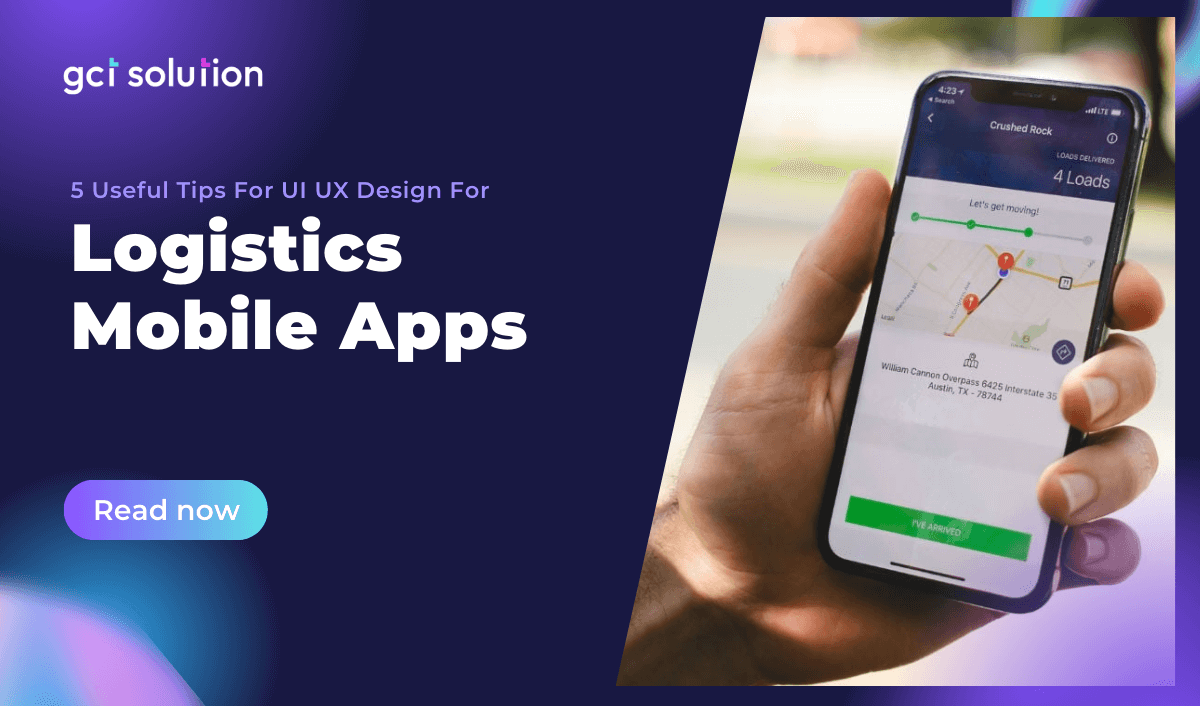
5 Useful Tips For UI UX Design For Logistics Mobile Apps
Enhance the user experience of your logistics mobile app with the help of GCT Solution's customer-centric approach to UX UI design. Learn how to create the best logistics mobile UI design through various case studies.